Kearney, MIT autonomous truck cost model: $4.00 a mile in 2026, parity near $2.60 in 2028, $38,000 AV stack, 1.5x insurance
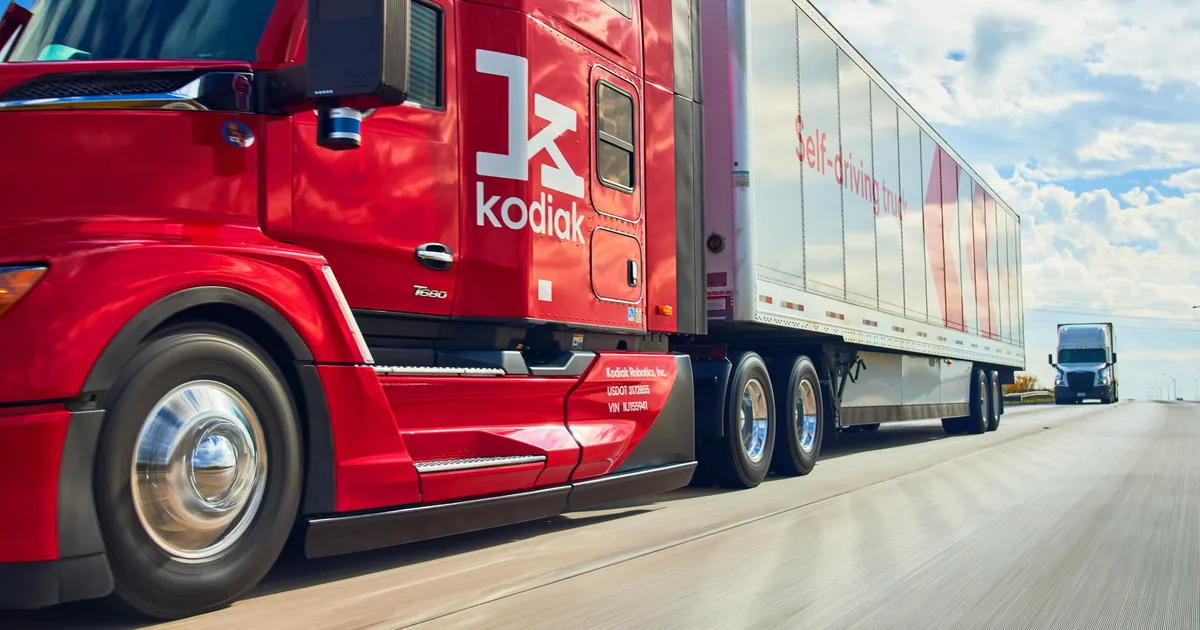
Kearney and the MIT Mobility Initiative published a cost model on Nov. 5 that puts a US driverless truck at about $4.00 a mile in 2026, while a conventional truck's cost rises with inflation. The two cross at roughly $2.60 a mile around 2028, and the autonomous cost falls to about $2.00 by 2035, a 49% decline. Europe crosses closer to 2030 and the Middle East closer to 2032 because drivers there cost less.
Source: Kearney with the MIT Mobility Initiative: Gaining ground with autonomous trucking (Nov. 5, 2026)
Key inputs: a $38,000 AV stack (four lidars, six radars, 12 cameras, NVIDIA Thor) amortized over four years and falling 15% a year, AV insurance at 1.5x the conventional premium falling to 0.7x by 2035, and one remote operator per 10 trucks in 2025 improving to one per 20 by 2035. The 2028 date assumes 40,000 autonomous trucks by 2035; at 10,000, US parity could slip to 2032. These are model projections, not observed fleet costs.
Servospace take: who makes money
Servospace analysis: The report prices the prize. Human driver cost, $1.26 a mile today, is the value pool that all four business models it names are chasing: OEM-led platforms, purpose-built cabless vehicles, autonomous carriers and virtual-driver-only suppliers. Kearney argues liability decides who keeps that money, and that a software-only virtual driver is unlikely to own the shipper relationship. Its priority segments are private full-truckload fleets (about a $450 billion market with about $180 billion in driver cost), for-hire dry van (about a $90 billion value pool) and LTL linehaul (about a $6 billion driver-cost value pool). The insurance line is a tell: Kearney says 25 insurers reportedly showed up for Waabi's autonomous policy renewal, while conventional trucking insurance has shrunk from about 11 providers to four. Treat the 2028 date as a fleet-scale bet. Kearney's modeled $4.00 is all-in cost per mile in 2026, not an observed fleet rate. FreightWaves cites Aurora's Fort Worth to Phoenix case study at $1.84 a mile versus $1.99 for a human driver; that is a high-utilization lane model, not the same all-in build. Goldman Sachs, in an April 30, 2026 analysis cited by FreightWaves, reached the same 2028 crossover year from an all-in autonomous cost of about $8.56 a mile in 2025. The number to watch is deployed truck counts.
More on Kodiak, Nvidia, Waabi and robotaxis and self-driving vehicles.
Sources
- Kearney with the MIT Mobility Initiative: Gaining ground with autonomous trucking (Nov. 5, 2026)
- FreightWaves (Thomas Wasson): Kearney, MIT put US driverless truck cost parity at 2028 (Nov. 10, 2026)
Go deeper: How robotaxis work: Tesla vs Waymo, explained.
Summarized by Servospace from the sources above, drafted with AI help and checked against those sources before publishing. Claims are the companies' or outlets' unless we say otherwise. How we work.