D.C. robotaxi bill B26-0684: 200-car fleet cap, 7.5-cent mileage tax, $15,000 permit; committee markup listed Nov. 12
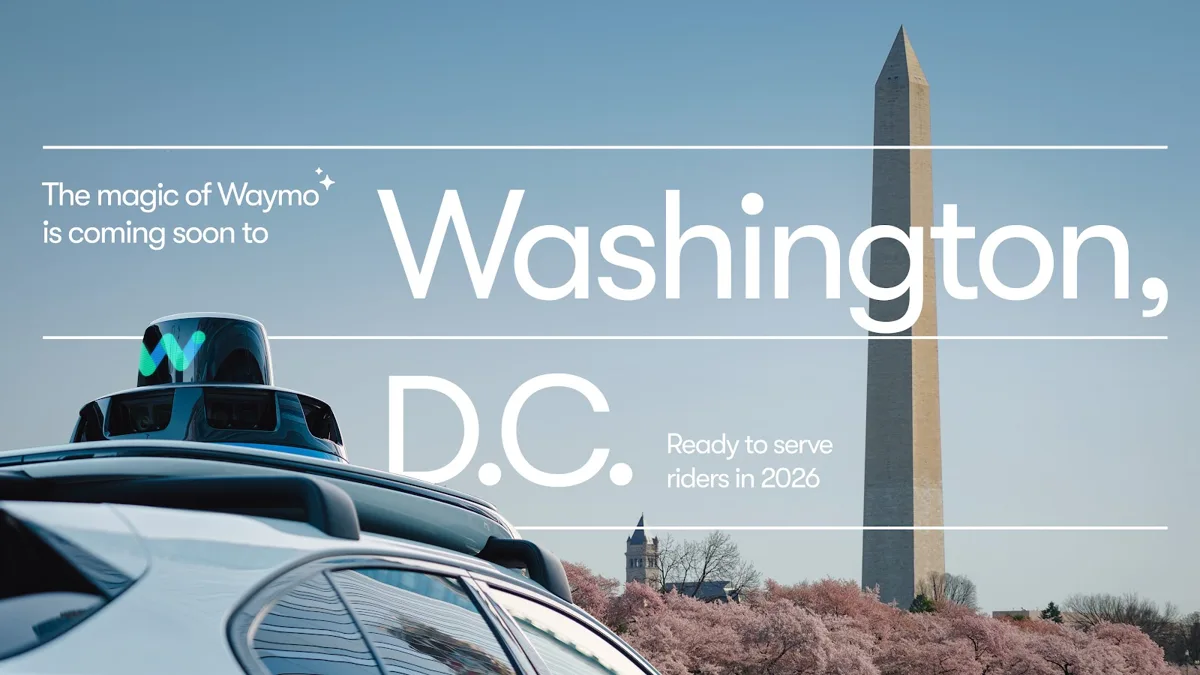
D.C. Council member Charles Allen, who chairs the Committee on Transportation and the Environment, released a revised version of his robotaxi bill, B26-0684, on Nov. 10. It would cap driverless fleets at 200 vehicles per operator and 800 citywide at any one time, and tax them 7.5 cents per mile, half the rate first proposed. The upfront cost of a commercial permit would fall from $6 million to $15,000 plus $750 per vehicle, Axios reports. Ride-hail drivers and AV maintenance workers would get the right to unionize.
Source: WJLA 7News: Charles Allen releases revised bill to regulate driverless rides in DC (Nov. 10, 2026)
It is still a proposal. LegiScan lists a committee markup for Nov. 12, but three of the committee's five members, including Mayor-elect Janeese Lewis George, Zachary Parker and Elissa Silverman, want to wait until next year. The Washington Post says the bill appears dead on arrival in committee.
Servospace take: the math of a capped market
Servospace analysis, using only the reported numbers: a full 200-car fleet would pay $15,000 plus 200 x $750, or $165,000, to get its permit, $825 a car. Under the $6 million upfront cost Axios cites for the original bill, the same fleet would have paid $30,000 a car, about 36 times as much. The 7.5-cent tax works out to $7.50 per 100 miles, and Allen's office says it is meant to discourage driving empty between fares, so it applies to repositioning miles too. No D.C. fare exists yet, so its share of trip revenue can't be calculated.
The cap is the bigger limit. 800 cars citywide leaves room for at most four full-size fleets, and NBC4 says Waymo appears to be the only company ready to run at that volume. A 200-car fleet would need 40 wheelchair-accessible cars, 20% of 200, by Jan. 1, 2034. Before carrying riders, each operator would need 75,000 driverless test miles over 90 days, Hill Rag reports, about 833 miles a day across its fleet. Waymo said in March 2025 it would be ready for D.C. riders in 2026. NBC4 now puts the earliest pickups in 2028; Allen told Hill Rag October 2027 is possible but early 2028 more likely, if the bill becomes law and is funded in the next budget. Hill Rag also reports the bill lapses if it is not passed this council period, whose final legislative meeting is Dec. 15.
More on Waymo and robotaxis and self-driving vehicles.
Sources
- WJLA 7News: Charles Allen releases revised bill to regulate driverless rides in DC (Nov. 10, 2026)
- Axios Washington D.C.: D.C.'s robotaxi bill gets a major rewrite. It may not be enough. (Nov. 10, 2026)
- NBC4 Washington: Revised DC bill would clear path for driverless taxis, but does it have the votes? (Nov. 10, 2026)
- Hill Rag: Allen Makes the Case for Driverless Cars on District Terms (Nov. 10, 2026)
- The Washington Post: Robotaxi bill appears dead on arrival at D.C. Council committee (Nov. 11, 2026)
- LegiScan: DC B26-0684 bill status and introduced text
- Waymo: Next stop for Waymo One: Washington, D.C. (March 25, 2025)
Go deeper: How robotaxis work: Tesla vs Waymo, explained.
Summarized by Servospace from the sources above, drafted with AI help and checked against those sources before publishing. Claims are the companies' or outlets' unless we say otherwise. How we work.