Volvo Cars trains Hexagon AEON humanoids in Ghent for mid-2027 production
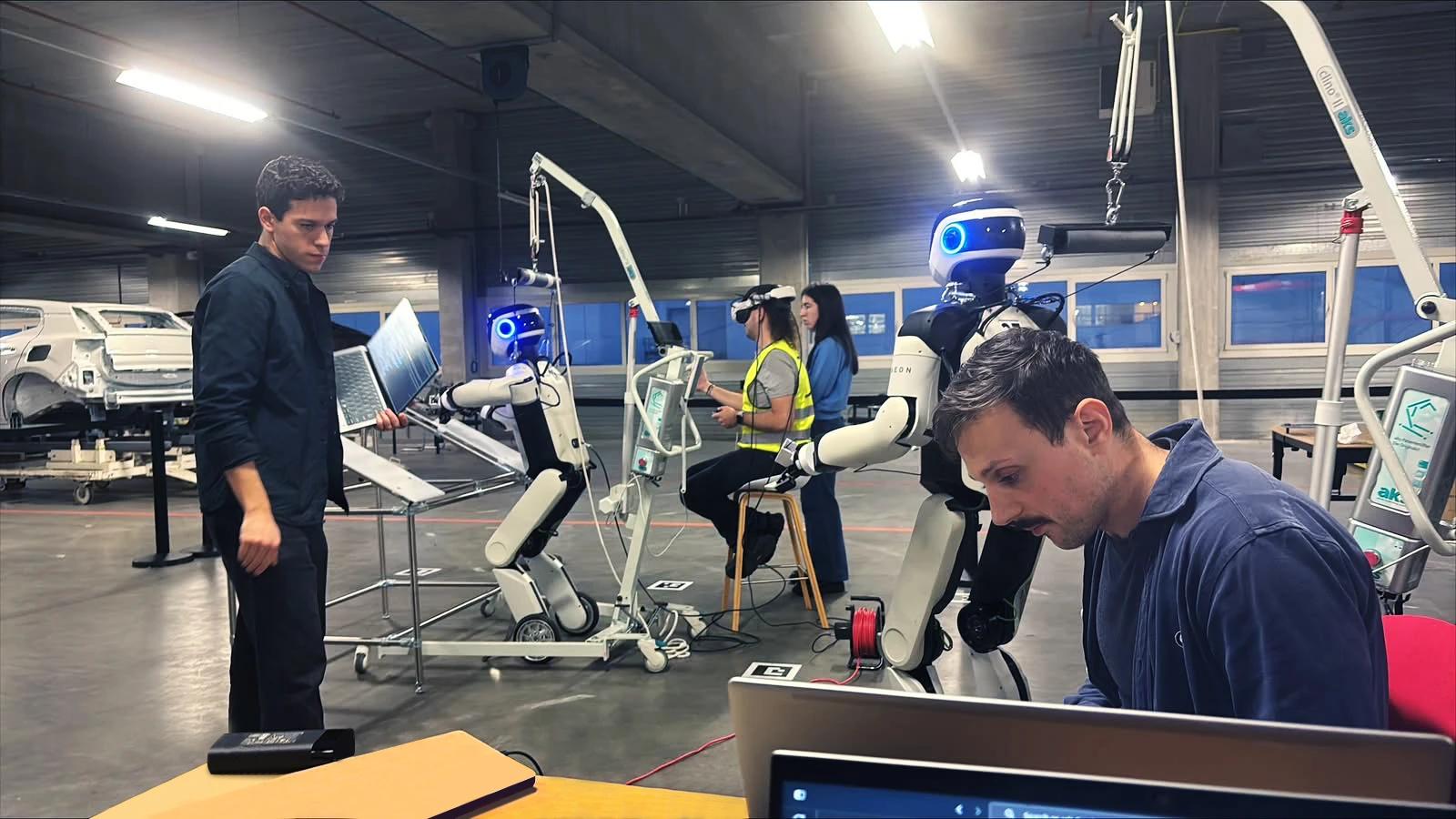
Volvo Cars said on Nov. 26 that it has brought AEON humanoid robots from Hexagon's Robotics division to its plant in Ghent, Belgium, its first factory to try humanoids. Volvo's own team is training them with imitation learning, starting with placing components into two fixtures with high precision, before moving to multiple parts, moving around the production area and working with the plant's automated systems. Belgian broadcaster VRT NWS reported that two AEON robots are being trained and tested. A factory pilot with more units is planned for the first half of 2027, and Volvo says the aim is real production use from mid-2027. Servospace take: this is a training phase, not a deployment yet. Hexagon gets a named carmaker reference, but no unit order, price or contract terms were disclosed.
Servospace take: a reference customer for Hexagon, but the money is still undisclosed
What is confirmed: Volvo Cars says Ghent is its first plant to try humanoid robots, that the robots are learning alongside employees and existing automation, and that the first task is placing components into two fixtures with high precision. Volvo gives the robot's specs as 1.65 metres tall, 60 kilograms, wheels instead of feet, up to 2.4 metres per second and a 10 kilogram payload. VRT NWS reported that two AEON units are in training now, and quoted Volvo Car Gent spokesperson Barbara Blomme saying the robots are not meant to replace people but to make production more efficient and take over some ergonomically difficult tasks (Servospace translation from Dutch).
What is still a plan: the factory pilot in the first half of 2027, when Volvo says more AEON units will arrive, and production use from mid-2027. Volvo frames the goal as safer, more flexible and more efficient manufacturing; it has not published a cycle time, success rate or cost target, so those claims cannot yet be checked.
Who makes money: Hexagon, the Swedish technology group, is selling AEON as a multi-purpose industrial platform, and a carmaker training it on its own line is the kind of reference a humanoid supplier needs before volume orders. Neither company disclosed how many units Volvo will buy, what it pays or whether the pilot converts into a fleet. A 10 kilogram payload points to light, precise part handling such as fixture loading rather than heavy lifting. What to watch: the number of AEON units that arrive for the 2027 pilot, whether Volvo names a second plant, and whether either side publishes throughput or uptime figures from Ghent.
More on robot business and funding.
Sources
- Volvo Cars (Nov. 26, 2026): Volvo Cars trains Hexagon Robotics' humanoids for manufacturing; Ghent first plant to try humanoids; imitation learning; first task placing components into two fixtures; AEON specs; factory pilot H1 2027; production use from mid-2027; quotes from Magnus Nilsson and Arnaud Robert
- VRT NWS (Nov. 26, 2026, Dutch): two AEON robots being trained and tested in Ghent; spokesperson Barbara Blomme on not replacing staff and why Ghent was chosen
- VRT NWS (Nov. 26, 2026, English): Volvo Car testing humanoid robots in Ghent
Go deeper: Humanoid robots at work beyond Agility: what customers confirm.
Summarized by Servospace from the sources above, drafted with AI help and checked against those sources before publishing. Claims are the companies' or outlets' unless we say otherwise. How we work.