Pony.ai and Toyota launch driverless commercial bZ4X robotaxi service in Guangzhou; 1,000-unit target now undated
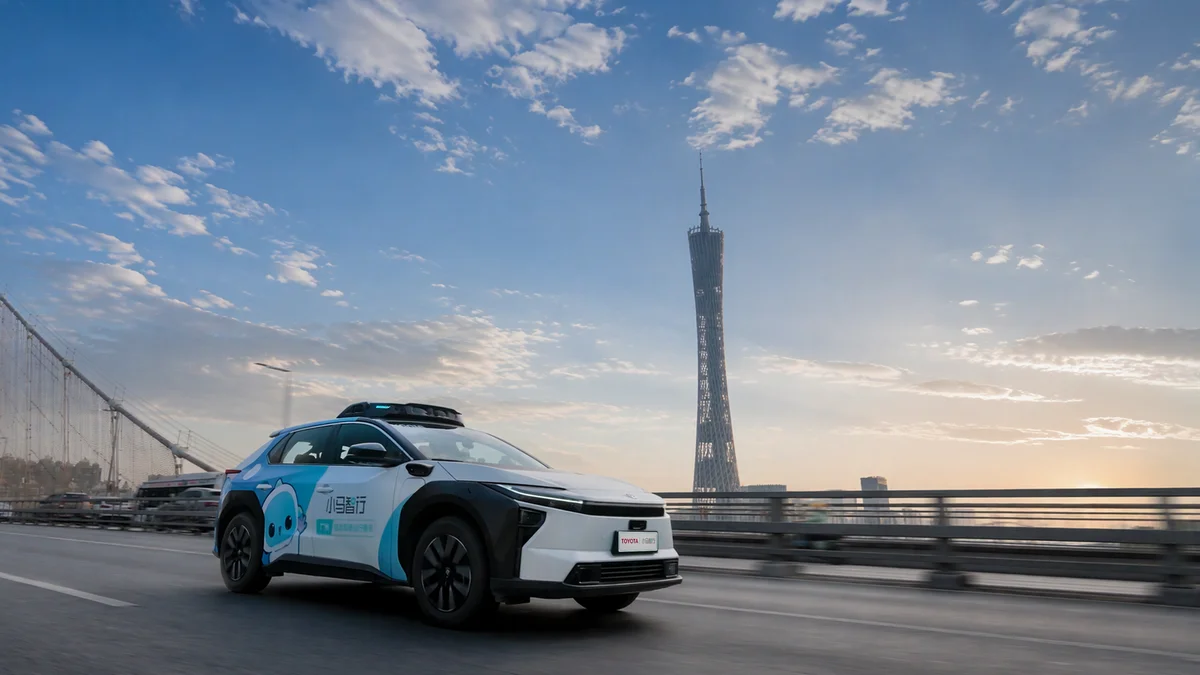
Pony.ai and Toyota said on Nov. 16 that their jointly developed Gen-7 bZ4X robotaxi has joined Pony.ai's fully driverless commercial fleet in Guangzhou, bookable 24 hours a day through the PonyPilot app and Pony.ai mini-programs on WeChat and Alipay. CnEVPost, citing the companies' Chinese statements, says service starts in the Nansha district and describes it as pilot operations. The companies say they are working toward around 1,000 bZ4X robotaxis across major Chinese cities and are testing in other cities. They did not disclose how many bZ4X cars are carrying riders, fares or a timeline. In February, Pony.ai said the partners planned to produce more than 1,000 bZ4X robotaxis in 2026. Pony.ai's interim report says its global Robotaxi fleet was 1,975 vehicles on June 30, against a target of more than 3,500 by year-end.
Servospace take: the car is in service, the count is the question
Servospace analysis: this is a model joining an existing paid driverless fleet, not Pony.ai's first commercial launch, so the business test is volume. On Feb. 9 Pony.ai said the partners planned to produce more than 1,000 bZ4X robotaxis in 2026. Monday's release says only that they are working toward around 1,000, with no year attached and no count of cars now in service. Pony.ai's interim report puts its global Robotaxi fleet at 1,975 vehicles on June 30 and keeps a target of more than 3,500 by the end of 2026. Hitting that means adding more than 1,525 vehicles in the second half, by our math, roughly 250 a month. Pony.ai also says Guangzhou reached city-wide unit economics breakeven in November 2025; that is a company claim, not an audited city-level figure. For suppliers and investors, the number to watch is Pony.ai's next fleet disclosure: how many bZ4X units are carrying paid riders, and whether the 3,500 target holds.
More on Toyota and robotaxis and self-driving vehicles.
The source post
Post by Pony.ai on X.
View the post on X
Sources
- Pony.ai newsroom (Nov. 16, 2026): Pony.ai and Toyota launch fully driverless commercial services with Gen-7 bZ4X Robotaxi (24/7 Guangzhou service, around 1,000-unit plan, no count disclosed)
- CnEVPost (Nov. 16, 2026): Pony AI and Toyota launch bZ4X robotaxi service in Guangzhou (Nansha district, pilot operations wording in Chinese statements, no fleet count or timeline)
- Pony.ai investor relations (Feb. 9, 2026): first mass-produced Gen-7 bZ4X Robotaxi rolls off the line; more than 1,000 planned in 2026
- Pony AI interim report, HKEX filing (Sept. 23, 2026): fleet of 1,975 vehicles at June 30, target above 3,500 by year-end, Guangzhou unit economics breakeven claim
- Pony.ai on X (Nov. 16, 2026): launch announcement
Go deeper: How robotaxis work: Tesla vs Waymo, explained.
Summarized by Servospace from the sources above, drafted with AI help and checked against those sources before publishing. Claims are the companies' or outlets' unless we say otherwise. How we work.