Amazon Prime Air drones begin Mt. Juliet, Tennessee flights
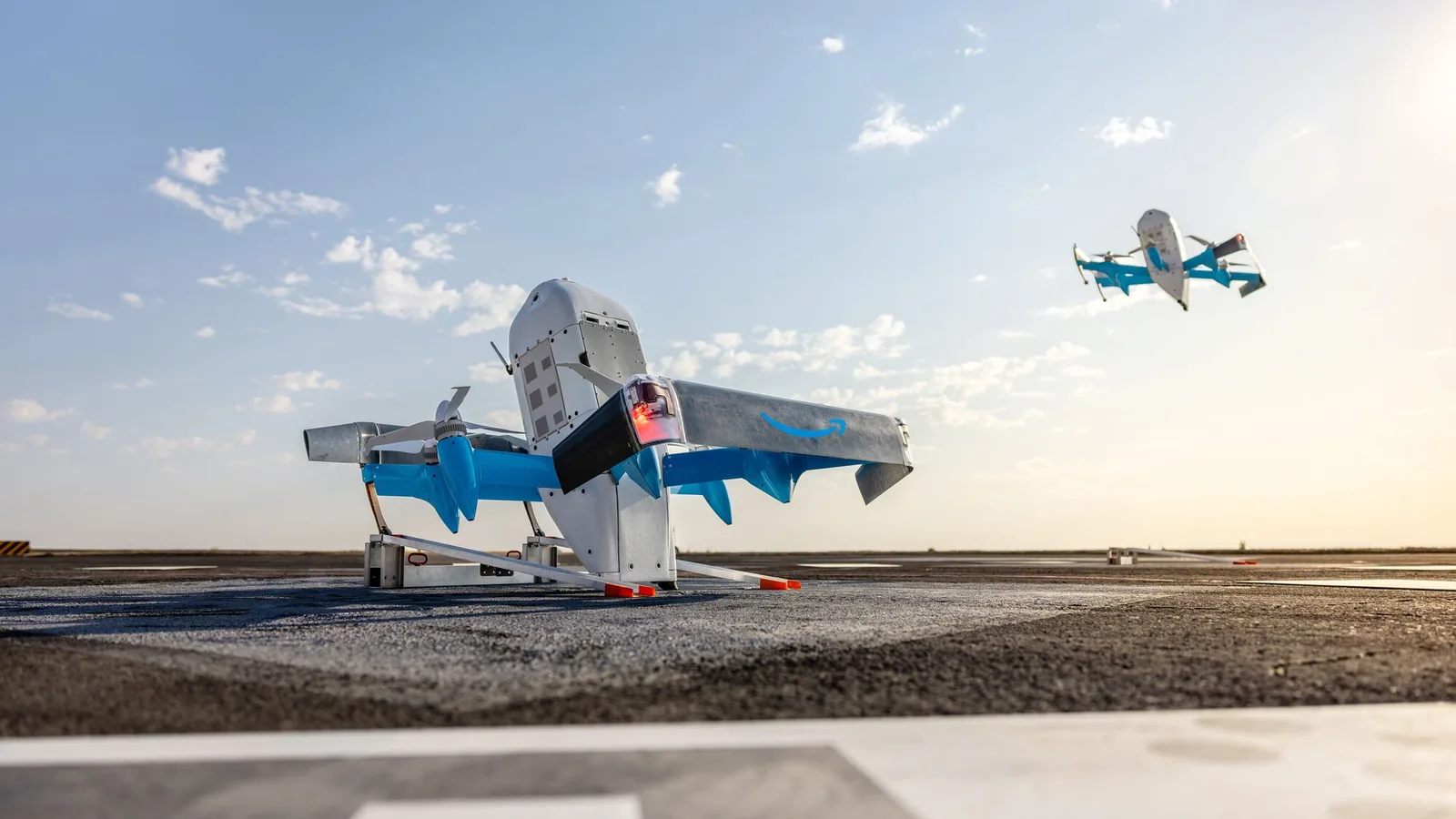
Amazon Prime Air began MK30 drone deliveries from its Mt. Juliet, Tennessee, fulfillment center east of Nashville on Sunday, Nov. 22, according to residents and police who spoke to local stations. Amazon announced the service in a Monday press release. Eligible addresses within 7.5 miles can order items up to 5 pounds, and Amazon says some orders arrive in as little as 30 minutes, most in about an hour. Mt. Juliet Police Chief Tyler Chandler told Fox 17 his dispatchers took numerous calls about low-flying drones on Sunday and police did not know the exact start date. The launch came two days after an MK30 came down on a Michigan garage, a crash the FAA is investigating. Servospace take: the new site widens reach, but Amazon has not published per-site delivery volumes.
Servospace take: another site on the map, but volume and neighbors are the test
Servospace analysis: Amazon's announcement and its first flights did not line up. WSMV reported that Amazon launched the service in Mt. Juliet on Sunday, Nov. 22, and resident Jill Winter told the station her package landed in her backyard less than an hour after she ordered it that day. Another Wilson County resident told NewsChannel 5 she received two drone packages on Sunday. NewsChannel 5 dates the launch to Monday, Nov. 23, the day of the Amazon press release WSMV cited. Chief Chandler told Fox 17: "We knew this was coming. We just didn't know exactly when it would start." He said Amazon had been talking with local officials as it prepared the facility, that the city does not regulate the airspace, which is the FAA's job, and that police told residents about the drones to cut the calls.
Amazon's own claims, per its release as quoted by WSMV and Fox 17: the drones fly under FAA oversight, are engineered with "multiple redundant systems, so in the rare event of an issue, the drone remains in control through landing," fly high for most of each trip on propellers designed to cut noise, and sound "comparable to a passing car." Residents who spoke to WSMV, WKRN and Fox 17 said the drones were louder than that, especially on descent. Amazon spokesperson Branden Baribeau pitched the service at suburban and semi-rural homes far from a store, for items such as diapers, baby formula, over-the-counter medications and pet supplies.
How big is the network? Amazon does not publish a current site count. Its Aug. 19 Prime Air page listed 11 U.S. sites in 10 metro areas and said Prime Air plans to reach nearly 500 U.S. cities and towns by the end of 2026, a company target. The Nov. 23 release, as WSMV printed it, names 14 other U.S. metro areas with drone delivery. Against the August list it adds Cleveland, Chicago, Boise, Atlanta and Columbus, and it does not name San Antonio. Nashville stations call Mt. Juliet Amazon's second Tennessee site after Memphis, which is not on that list either. Some metros, including Detroit, have more than one site, so a metro count is not a site count.
The unit economics are still unproven in public. A 7.5-mile radius covers about 177 square miles on Servospace arithmetic, in line with Amazon's figure of about 175 square miles per site. Drone delivery costs $2.99 for Prime members, $4.99 for others and nothing on Prime orders of $50 or more. The most recent U.S. site-level figure from Amazon that Servospace has found is about 150 orders a day at Richardson, Texas, in March, per the Dallas Observer, against a 1,000-flight daily ceiling in the FAA's Texas assessment. Prime Air chief David Carbon says Prime Air will pass a 4 million annual delivery run rate by the end of 2026, and Amazon's 2025 shareholder letter says it expects to deliver half a billion packages by the end of the decade. Both are company goals. Our drone delivery volume guide tracks these figures.
The regulatory risk sits with the FAA, not the city. The FAA's drone environmental review page, last updated Nov. 9, listed no document naming Tennessee when Servospace checked on Nov. 25. DroneXL notes that a hub can fit an FAA national finding without a site document, and Prime Air's operating approvals are not public, so the page cannot show how the Tennessee sites were cleared. On Nov. 23 the FAA confirmed to CNBC that it is investigating the Nov. 20 Huntington Woods, Michigan, crash, where a preliminary FAA report says an MK30 struck a fiber cable and a garage on takeoff. The FAA's Detroit-area assessment puts the MK30's maximum takeoff weight at 83.2 pounds. What to watch: the Michigan findings, daily flight counts at Mt. Juliet, and whether Amazon gives neighbors notice before its next launch.
More on Amazon, FAA and drones.
Sources
- WSMV (Chasity Maynard, Nov. 23, 2026): Amazon launches drone deliveries in Nashville area; Monday press release, 7.5 miles from Mt. Juliet, under 5 lbs, fees, Baribeau quote, 14 other US metro areas listed
- Fox 17 WZTV (Madeleine Nolan, Nov. 24, 2026): Mt. Juliet Police Chief Tyler Chandler on Sunday calls and the unknown start date; resident Jill Winter on noise and the Michigan crash
- WSMV (Braden Ross, Nov. 23, 2026): Amazon launches Prime Air delivery drones in Mount Juliet; service launched Sunday
- NewsChannel 5 WTVF (Nov. 2026): Amazon launches drone delivery in Nashville area; resident received two drone packages Sunday; second Tennessee site after Memphis
- WKRN (Liz DeSantis, Nov. 23, 2026): Amazon launches drone delivery in Middle Tennessee; residents received packages over the weekend
- DroneXL (Haye Kesteloo, Nov. 25, 2026): Amazon drones reach Nashville area, and police didn't know the date; FAA environmental review index (last updated Nov. 9) has no Tennessee document; FAA Detroit-area assessment puts MK30 at 83.2 lbs at takeoff; FAA confirmed Michigan investigation Nov. 23
- Amazon (Aug. 19, 2026): Prime Air drone delivery expanding to nearly 500 US cities and towns; 11 sites in 10 metro areas; about 175 square miles per site
- Servospace guide: Drone delivery caps vs real deliveries (Richardson 150 orders a day, Carbon run rate, shareholder letter goal)
- Servospace (Nov. 22, updated Nov. 24, 2026): Amazon Prime Air drone comes down on a Michigan garage; FAA confirmed to CNBC it is investigating; preliminary FAA report
Go deeper: Drone delivery caps vs real deliveries: what FAA filings and company counts show.
Summarized by Servospace from the sources above, drafted with AI help and checked against those sources before publishing. Claims are the companies' or outlets' unless we say otherwise. How we work.